
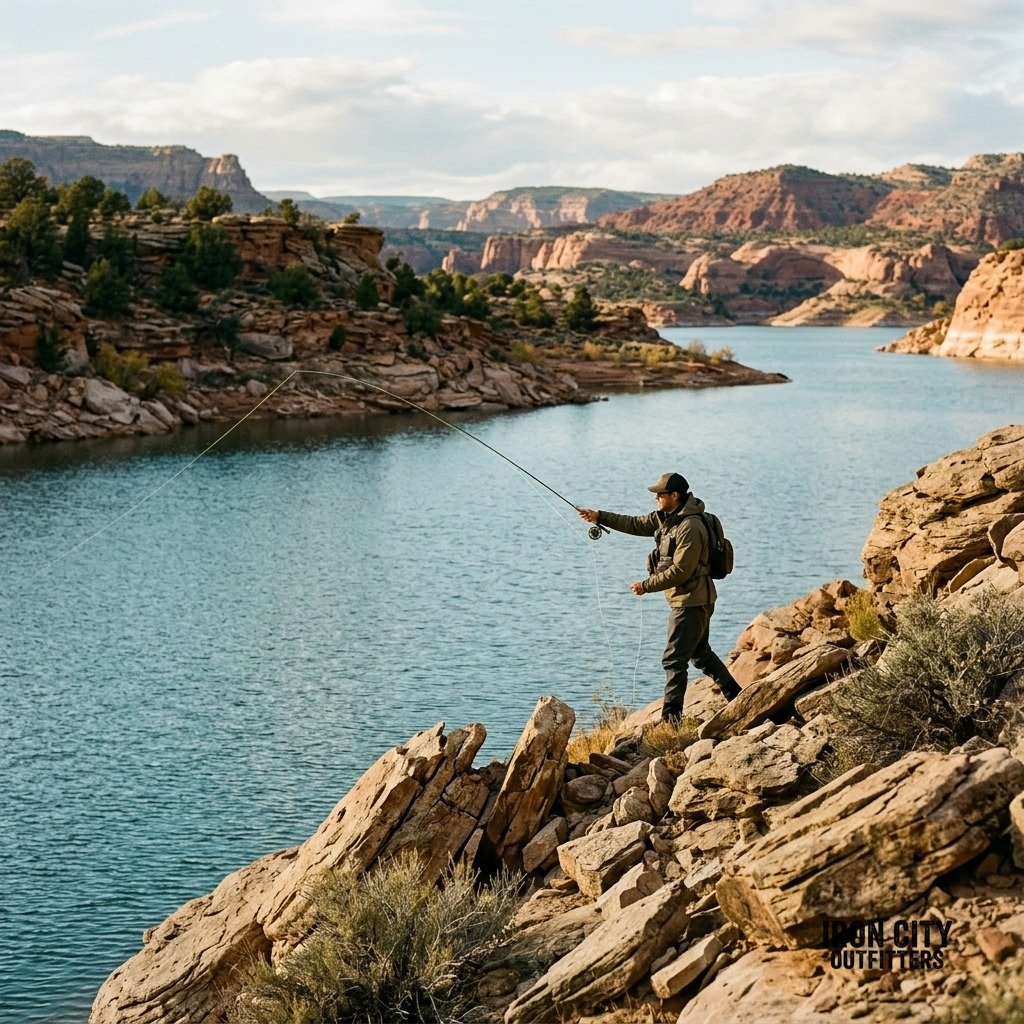
Anglers across Utah are now barred from keeping kokanee salmon at any waterbody statewide, a closure that took effect Sept. 10 and runs through Nov. 30, according to the Utah Division of Wildlife Resources’ Southeastern Region fishing forecast issued Sept. 11. The annual restriction protects kokanee during the fall spawning run, when the landlocked salmon congregate in shallow water and become especially vulnerable to harvest.
Full bulletin: https://dwrapps.utah.gov/fishing/?utm_medium=email&utm_source=govdelivery
The closure applies statewide, not just in southeastern Utah, and covers kokanee caught incidentally while targeting other species. Anglers pursuing trout, splake or tiger muskie in waters that also hold kokanee — including Scofield Reservoir and Electric Lake — are reminded to release any kokanee immediately rather than keeping them, even unintentionally.
The bulletin also flags an active concern with harmful algal blooms (HABs) at some southeastern Utah lakes and reservoirs this season. Conditions can change quickly and are not always reflected in seasonal forecasts, so checking the Utah Division of Water Quality’s recreational water advisory map before heading out is recommended for any waterbody in the region.
Beyond the closure and HAB advisory, the forecast points to strong fall fishing across the region as cooling water temperatures push trout, splake, wipers and tiger muskie into more active feeding patterns. Joes Valley Reservoir, one of the region’s Blue Ribbon fisheries, is highlighted for splake targeting spawning Utah chub near shorelines, along with rainbow trout and tiger muskie holding in rocky structure five to fifteen feet deep. Scofield Reservoir, also a Blue Ribbon water, is noted for early-morning tiger trout and cutthroat activity as chub spawning draws predators into shallow water.
Smaller waters across the region — including Huntington North Reservoir, Ferron Creek and the Colorado and Green rivers — are expected to fish well into November as algae and summer vegetation die back and trout resume active feeding ahead of winter. Brown trout in creeks such as Huntington Creek and the Price River are entering prespawn aggression, making streamers and egg patterns effective through the fall.
A current fishing license is required statewide, and anglers are reminded not to transport live fish between waterbodies or release unwanted pets into lakes or streams, both of which spread invasive species and disease.
Assisted by AI; content may contain inaccuracies.