
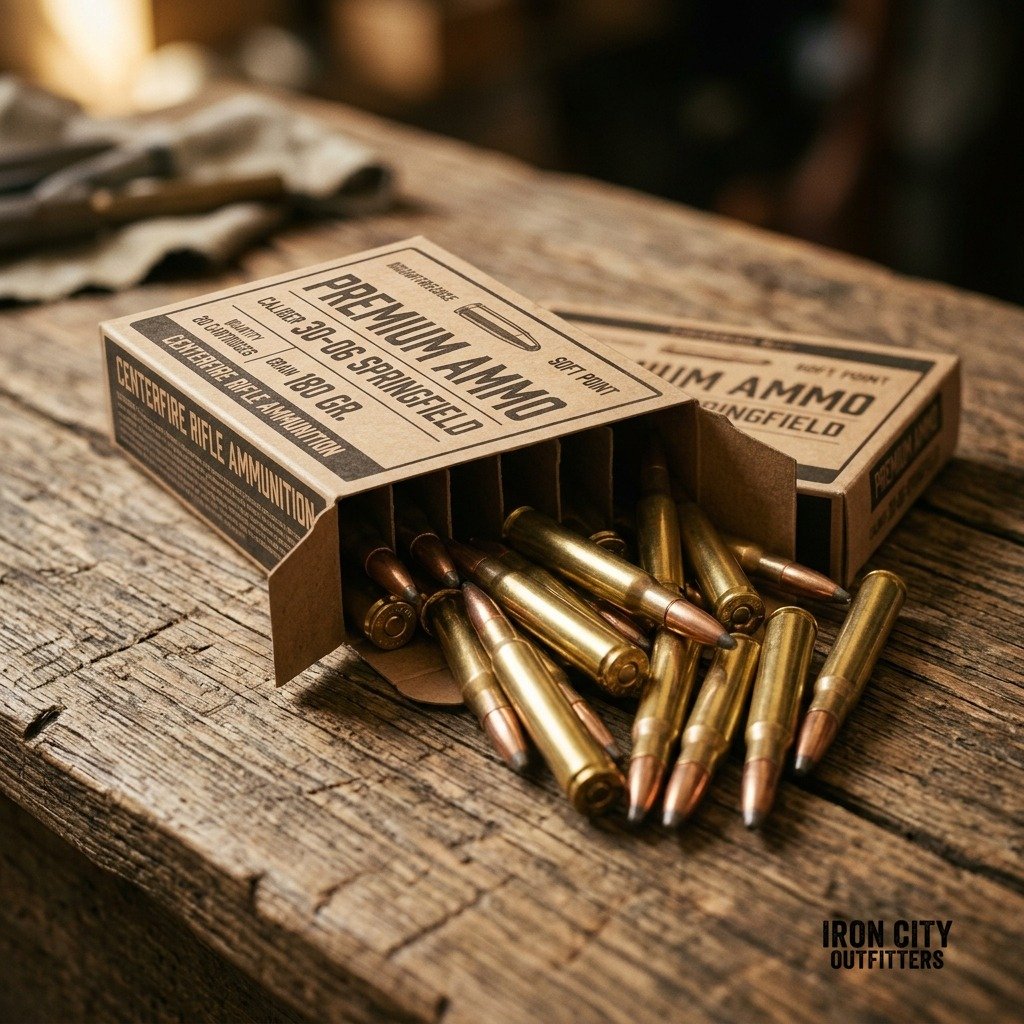
New shooters come to the counter holding a box of ammo, turning it over, and asking some version of the same question: “how do I know this is right for my gun?” Fair question — the label is packed with numbers and abbreviations that mean nothing until someone explains them once. After that, you’ll never look at a box the same way.
The Caliber Is the Non-Negotiable Part
This is the one number that has to match your firearm exactly — no substitutions, no “close enough.” A gun chambered in 9mm takes 9mm. Some calibers look similar on paper and are not interchangeable (.380 ACP and 9mm are not the same round, despite both starting with a similar bullet diameter). If you’re ever unsure, check what’s stamped on your barrel or your owner’s manual before you check the shelf — that’s the number that actually matters, not what you remember buying last time.
Grain Weight Changes How the Round Behaves
The number followed by “gr” is the bullet’s weight in grains. A lighter bullet (lower grain) generally moves faster and shoots flatter over distance; a heavier bullet (higher grain) carries more energy and typically bucks wind better. Neither is “correct” — it depends on what you’re doing. A lot of factory defensive loads and hunting loads are built around a specific grain weight for a reason, so if a load worked well for you, that number is worth remembering.
FMJ, JHP, and the Rest of the Alphabet
FMJ (full metal jacket) is your standard range and target round — it doesn’t expand, which is exactly why it’s the wrong choice for hunting or home defense and the right choice for putting rounds downrange affordably. JHP (jacketed hollow point) is built to expand on impact, which is what you actually want for hunting and defensive use. Seeing “soft point” on hunting ammo means something similar — controlled expansion, built for game, not paper.
Brass vs. Steel Case, and Why It’s on the Label
Brass-cased ammo is the standard — reliable, and what most guns are built and tested around. Steel-cased ammo is cheaper and fine for a lot of range guns, but it’s harder on extractors over time and some firearms are pickier about it than others. If you’re not sure whether your gun likes steel case, a box or two to test is a lot cheaper than finding out the hard way mid-string.
The +P You’ll See on Some Defensive Loads
A “+P” marking means the round is loaded to a higher pressure than standard for that caliber — more velocity, more recoil, more wear on the gun over time. Not every gun is rated for +P ammunition. This is one worth actually checking your owner’s manual for rather than guessing, since shooting +P in a gun that isn’t rated for it is a real mechanical concern, not just a preference.
Next time you’re holding a box trying to decide, that’s really the whole label: caliber has to match exactly, grain weight changes behavior, the letters after the grain weight tell you the bullet’s job, and the case material and pressure rating are about what your specific gun can handle. Once you know what you’re looking at, the wall of ammo at the counter stops being confusing and starts being useful.