
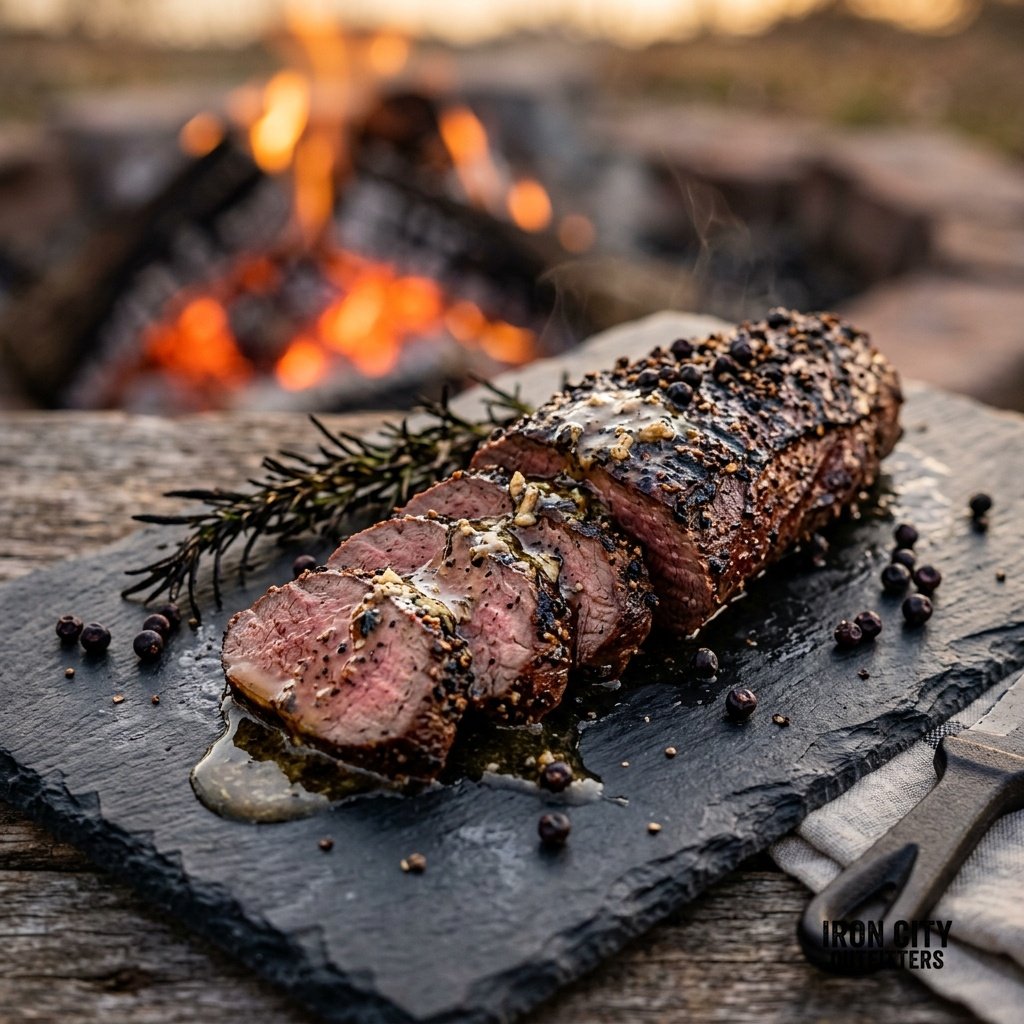
A sous-vide bath holds water at a locked temperature, patient to the tenth of a degree, obedient to a dial. Naked coals answer to nothing. Direct-ember searing strips away the grate, the pan, the buffer of engineered steel between protein and flame, and presses meat straight into a glowing bed of hardwood embers — an unfiltered exchange of carbon, heat, and fat that no kitchen appliance can fake. The result is not polished. It is primal, blistered, and honest, and it produces a crust no oven will ever earn.
The Technique: Direct-Ember Searing
Direct-ember searing — sometimes called caveman-style cooking — sets protein straight onto a raked bed of coals with no grate and no pan as intermediary. Ash serves as insulation, coals as the heat source, airflow as the only variable under active control. Hardwood species matter enormously: oak and hickory burn dense and long, holding temperature far longer than softer, resinous woods, which throw sparks and impart bitterness. A properly built bed glows deep orange-red under a fine gray ash coat, keeping flare-ups from scorching the surface before the interior reaches temperature. Contact time runs short — minutes, not the low-and-slow hours of smoking — and the payoff is a deeply caramelized, lacquered crust locked in by rapid Maillard reaction against heat far exceeding what any pan can transfer.
[Click Here to Copy the Full Recipe & Firewood Ratios]
Venison backstrap suits this technique better than almost any other cut: lean, dense, and fine-grained, it sears fast and rests clean, without the flare-inducing fat cap that turns coal contact into a grease fire. A juniper and black pepper crust adds resinous, gin-forward brightness that cuts straight through the char, while a finishing pour of charred rosemary-garlic butter — built separately in a small cast-iron vessel set at the edge of the same coal bed — bridges the smoke with something rounder and more forgiving.
Full Recipe & Firewood Ratios
Ingredients: 1 venison backstrap (1.5–2 lb, silverskin removed); 2 tbsp crushed juniper berries; 1 tbsp cracked black pepper; 1 tbsp coarse salt; 4 tbsp butter; 3 cloves garlic, smashed; 2 sprigs rosemary; zest of 1 lemon.
Firewood ratio: 70% oak to 30% hickory by volume, burned down roughly 45–60 minutes before cooking until fully collapsed into glowing coals with a visible ash coat — no open flame, no black unburned wood remaining.
Method: Press the juniper, pepper, and salt crust firmly into the backstrap. Rake coals into an even 2-inch bed. Lay the backstrap directly on the embers, 90 seconds per side for a 1.5-inch-thick cut, brushing away any clinging ash with a dry pastry brush between turns. Rest 5 minutes tented loosely. Meanwhile, melt butter with garlic, rosemary, and lemon zest in a small skillet set at the coal bed’s edge until the herbs char at the tips. Slice backstrap against the grain, spoon over the charred butter, and serve immediately.
Assisted by AI; content may contain inaccuracies.