
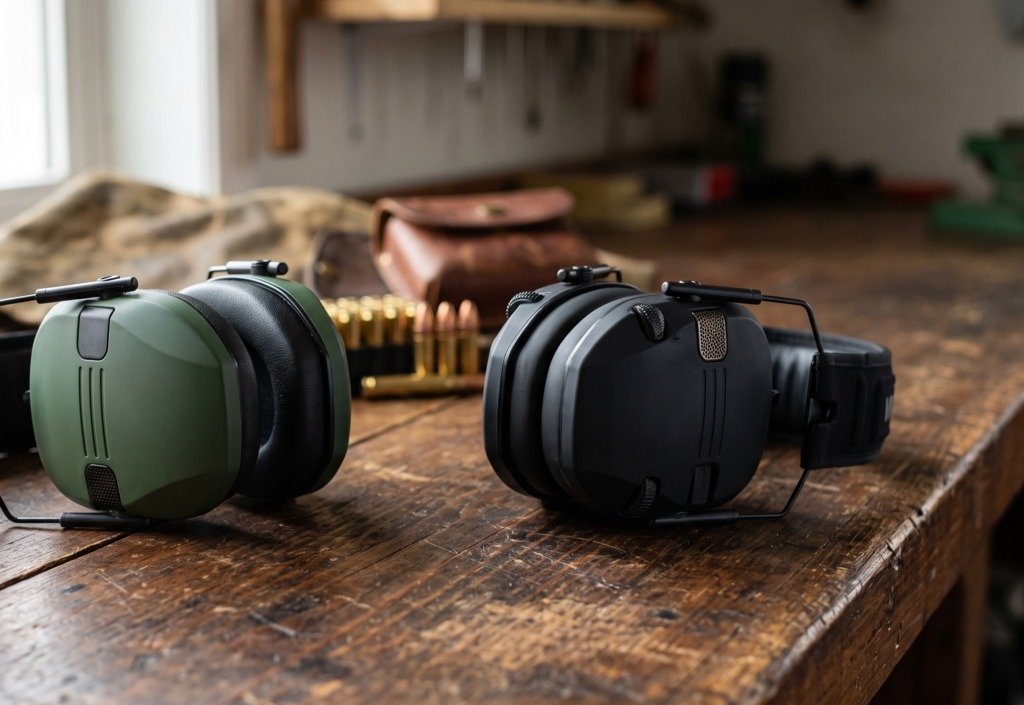
This is probably the question we get asked most at the counter, right after “what ammo do I need.” Everyone knows they need ear protection. Fewer people know there are really two different tools doing two different jobs, and picking the wrong one for how you actually shoot is why so many earmuffs end up sitting in a truck console instead of on your head.
What Passive Protection Actually Does
Passive muffs and plugs are simple: they block sound, full stop. No batteries, no electronics, nothing to fail. You get a Noise Reduction Rating printed right on the box, and that number does its job every single time you put them on.
The tradeoff is exactly what you’d expect — they block everything equally. Range commands, your buddy talking to you, your own footsteps. Great for a static bench session where you’re not doing much talking. Less great anywhere you need to hear what’s happening around you.
What Electronic Protection Actually Does
Electronic muffs still protect at the same NRR level, but they use built-in microphones to amplify normal conversation-level sound and then clamp down hard the instant they detect a gunshot. You can hear your hunting partner whisper, hear a range officer’s commands, hear game moving through brush — right up until the moment it matters, when the electronics do their job just as fast as passive ever did.
The tradeoff here is cost and battery management. Nobody wants dead batteries at 5am on opening morning, so if you go electronic, a battery check goes in your pre-hunt routine, not an afterthought.
So Which One Do You Actually Need
If you’re mostly doing range days, bench sessions, or high-volume defensive drills where communication doesn’t matter much, passive is genuinely fine — cheaper, simpler, nothing to maintain. We’re not going to talk you out of a good pair of passive muffs just because electronic exists.
If you’re hunting, running a course with other shooters, or spending real time on a static line where you need to hear people around you, electronic earns its price difference fast. Being able to hear a whispered “there” while a scope tracks is not a luxury feature out there — it’s most of the reason electronic exists in the first place.
The One Thing We Tell Everyone
Whichever you pick, actually wear it. The best hearing protection in the store does nothing sitting in a drawer at home. If the passive pair is more comfortable for you and that means you’ll actually keep it on for four hours instead of taking it off after twenty minutes, that’s the right pair — full stop.
That’s really the whole conversation, and it’s usually a two-minute one at the counter. We just wanted it written down for the next person who asks.