
Ten minutes of exposure to temperatures above 78°F can prove lethal. Not from a fall, not from a predator’s jaws — from heat alone. High above tree line, where boulder fields fracture into jagged talus slopes, a creature the size of a closed fist waits out the hottest hours of the day beneath the rock, and any miscalculation of timing ends in death by thermal stress.
The American Pika (Ochotona princeps) occupies one of the narrowest survival windows of any mammal in the Mountain West. Dense, non-shedding fur — built for insulation against subzero alpine winters — becomes a liability once summer sun strikes exposed granite. Body temperature climbs fast under that coat, and prolonged exposure to direct light brings on fatal overheating in under an hour.
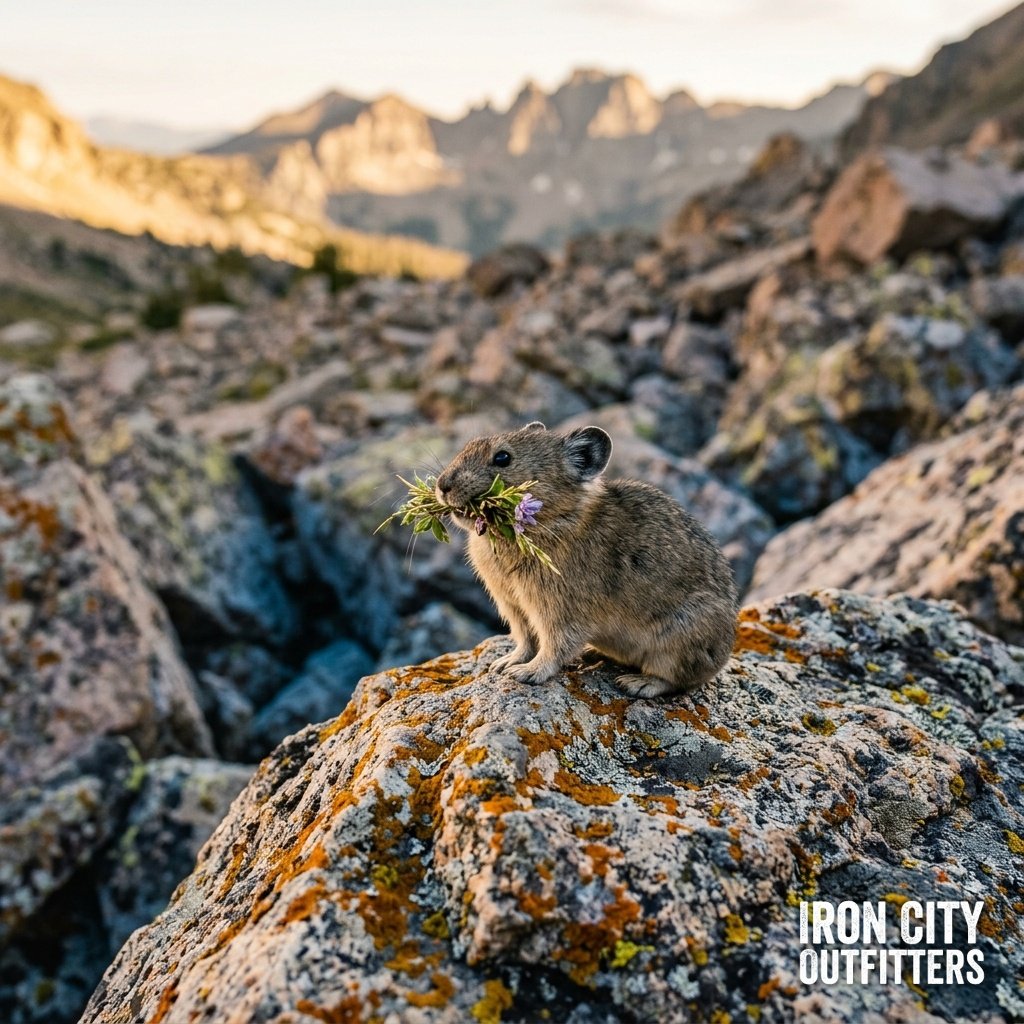
Survival here depends on precision foraging. Unlike the slow accumulation strategies of ground squirrels, pikas build “haypiles” — stockpiles of clipped grasses, sedges, and wildflowers gathered in short, frantic bursts between shaded refuges. A single individual may complete over a hundred foraging trips per day during peak summer, each run timed to the shifting shadow line across the talus. Certain plant species get preferentially selected and cured on exposed rock before storage, a behavior that appears to reduce toxin content and extend the haypile’s shelf life through the eight-month winter that follows.
No burrow gets dug. No hibernation occurs. Instead, the network of air gaps between broken boulders provides year-round shelter — cool in summer, insulated against subzero cold in winter — and territorial boundaries within that talus get defended with sharp, repeated alarm calls audible across the slope. Elevation and rock structure matter more to this species than to almost any other Utah mammal; isolated populations, cut off from one another by warming valleys between mountain ranges, face genetic isolation as talus patches shrink and warm at their lower edges.
Prime observation territory sits in the high basins of the Wasatch and Uinta ranges, above 9,500 feet, wherever broken rock meets alpine meadow. Albion Basin, at the head of Little Cottonwood Canyon, offers one of the most accessible and well-documented pika habitats in the state: Albion Basin, Alta, Utah.
Late summer, before the first hard frost, offers the clearest window to hear the sharp alarm call echo across the rockfall — the sound of a species racing the clock on two fronts at once, heat above and winter ahead.
Assisted by AI; content may contain inaccuracies.