
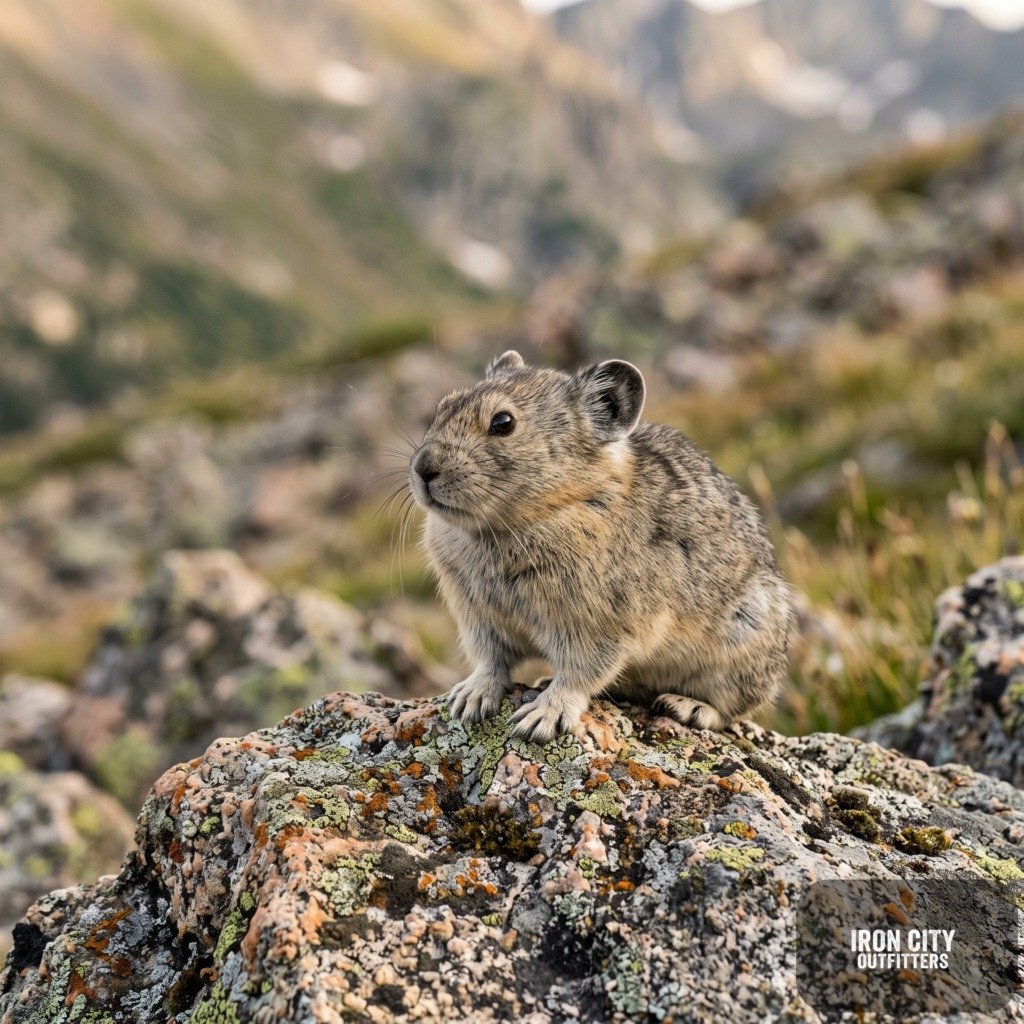
Ten thousand feet above the valley floor, a creature the size of a fist survives conditions that could kill it twice over — once by freezing, once by overheating — sometimes within the same summer afternoon. This is the reality of the American pika, a small, round-eared relative of the rabbit that makes its home in the broken rock fields above treeline, where most mammals simply cannot function.
No external tail, dense grayish-brown fur, and a compact body built entirely for heat retention define the pika’s physical profile. That same insulation becomes a liability the moment temperatures climb: core body temperature can spike to lethal levels after just a few hours of direct exposure above roughly 78°F, forcing constant retreat into the cool, shaded gaps between boulders. Talus slopes aren’t just scenery here — they’re a thermal survival system, offering shade in summer and insulation from subzero air in winter.
Unlike ground squirrels and marmots sharing the same high country, the pika does not hibernate. Instead, it spends short alpine summers engaged in “haying” — repeatedly foraging grasses, sedges, and wildflowers, then hauling and stacking them into drying piles atop rocks before caching the cured vegetation underground. A single haypile can represent dozens of foraging trips a day, fuel and food storage for eight or more months of activity beneath snowpack most other species wait out in a torpor.
Territoriality runs sharp for an animal this size. Each pika defends a small patch of talus against neighbors, marking boundaries and announcing intruders with a short, sharp “eeep” call audible well beyond the rockpile itself — often the first clue of the animal’s presence before any visual sighting.
Utah’s Uinta Mountains hold some of the state’s most accessible alpine talus habitat, and the fields surrounding Bald Mountain Trailhead along the Mirror Lake Scenic Byway rank among the more reliable places in the region to hear — and eventually spot — one. Early morning and late afternoon light tend to bring the most activity, as midday heat pushes the animal back underground.
Because the pika’s entire survival strategy hinges on a narrow thermal window, it has become one of the more closely watched indicator species for how warming alpine climates affect high-elevation wildlife. A creature that measures success in single-degree margins offers an unusually direct read on the health of the mountain it calls home.
Assisted by AI; content may contain inaccuracies.